
10 Tips for Maximum Home Energy Efficiency
At White Wolf Homes, we don’t just build beautiful homes – we build beautiful homes that have a positive impact on your lifestyle. As a locally owned and operated family business, we’re passionate about preserving our environment for future generations.
A net-zero energy house generates as much energy as it uses (output = input.) With a net-zero home, you can dramatically reduce your energy costs, letting you save for the important things in life, like your children’s college education and your retirement fund.
Did you know that you can even get a 15% or 25% rebate on your mortgage insurance premium from CMHC when you own a net zero house?
A Net-Zero Custom Home is a Modern Choice
According to Environment and Energy Leader, “in August 2019, green, LEED-certified home builds were at an all-time high, with nearly 500,000 single and multi-family units being certified around the world.”
Contrary to what you may have heard, a net zero home is NOT off the grid and doesn’t involve overcomplicated hard-to maintain systems or old-fashioned hand-crank water pumps. Your home can be built in the heart of the city and still be outstanding in its energy efficiency with municipal services as a backup. A brand-new net-zero build has better soundproofing, excellent insulation and has excellent climate control to keep it at just the right temperature, year-round. It’s easy living for the renewable energy generation. Natural Resources Canada and Science at Work created an excellent YouTube video explaining what net-zero is.
Net-zero energy status is becoming more popular in North America as we turn our focus to eco-friendly and economical living. If you’ve been considering building a new home, think about building a net zero home. To learn even more, check out information on net-zero homes from the Canadian Home Builders Association (CHBA).
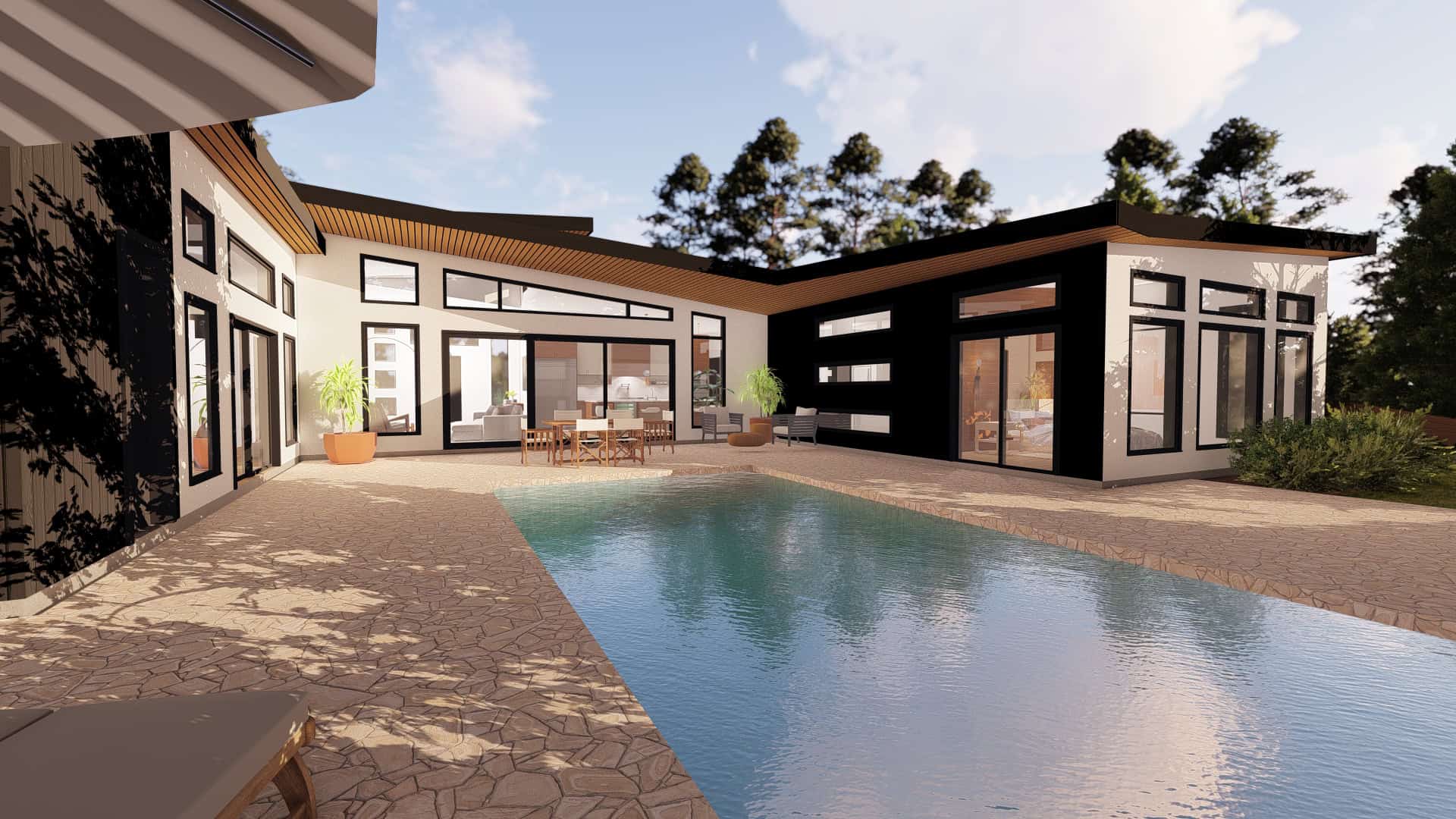
10 Ways to Design a Net-Zero Custom Home
1. Building Envelope
Like a bubble that surrounds your home, the building envelope is what prevents air leaks and heat loss. A well-designed and structured building envelope is a key way to keep your home as well insulated as possible. It will prevent drafts and keep your home warm in the winter and cool in the summer, without needing to blast the A/C or the heaters. In fact, many net-zero house owners find they can often bypass their heating and cooling systems since the temperature inside the home stays stable despite the weather conditions outside.
2. Energy-Efficient HVAC
Though you likely won’t reach for the thermostat nearly as often, you’ll still want an HVAC system. An energy-efficient system will make it simple to cool down or warm up the home, without significant power usage. Combined with the top-quality building envelope, your high-efficiency HVAC system will just work quietly in the background to filter the air and keep your home’s temperature perfectly balanced.
3. Passive Solar Design
Other than designing a top-quality building envelope, the first thing our design teams look at is the placement of your house. We will show you your options for optimal placement to take advantage of as much natural light and warmth as possible. Passive solar design typically means that the sides of the home face east and west, with the front and back of the home facing north and south. Green energy-focused homes are also designed with larger south-facing windows, skylights and glass walls that gently filter and guide light and warmth to the interior. The cleanest of clean energy, any home design can be based on the principles of passive solar design.
4. Solar Power
Solar panels, or photovoltaic panels, are more accessible and affordable than ever before for energy production and solar heating. The passive solar design of your net zero home will let solar panels take full advantage of sunlight. Any solar energy is typically banked, so you’ll have access to a source of energy even when the sun doesn’t shine. For best results, we recommend that solar panels are mounted directly facing the sun (north and south) at the home’s highest point (the roof.)
5. Geothermal Heating
Water or ground loop geothermal heating and cooling systems are more complex and expensive, to be sure, but you can recoup those initial costs more quickly than you may think. Geothermal heating taps into the constant supply of ground source heat. Simply put, a geothermal system is a series of pipes, buried in a closed or open loop underground. The loop is combined with a pump that draws heat from either the ground or a nearby body of water (lake, pond, ocean, aquifer) and sends it to the HVAC system into your home. Considering a geothermal heating system? If your lot is a good fit for this type of renewable energy source, the geothermal system can be designed and installed to coincide with the development of your lot.
6. Water Conservation
Another way to make your home eco-friendly is to conserve as much water as possible. This could mean harvesting rainwater for watering the garden, skipping the lawn in favour of hardscaping, or planting a drought-tolerant garden that’s designed to stand up to our increasingly dry Vancouver Island summer. These measures will reduce your water bill and water usage as a whole.
7. Water Saving Fixtures
Inside your home, choosing water-saving fixtures like high-efficiency toilets, a pressure-reducing valve on your main water line and performance showerheads can drastically reduce your water usage. For instance, most homes have a psi of 70 or higher, more than we really need. A pressure-reducing valve can reduce the pressure to 35psi, which is plenty for any single-family home. Drain recovery hot water systems (recirculating hot water systems) direct hot water from the hot water heater/tank to the individual faucets throughout the home. Rather than the single hot water pipe installed in older homes, you receive your hot water immediately. This prevents cold water from being dumped down the drain while waiting for the shower to heat up.
8. Smart Thermostats
The ultimate in convenience, smart thermostats let you monitor and adjust your thermostat even while you’re not at home, with access via an app. If no one is home, you can dial the temperature right down and set it to automatically increase when you’re about an hour away from returning. If everyone’s out of the house from 9-5, you can save energy all day long. This way, you’re conserving energy usage and your family comes home to a comfortable temperature. Smart thermostats are a brilliant way to keep tabs on your home’s climate and energy use, anytime. Using today’s advanced technologies, many smart devices can even “learn” your schedule, so you never have to lift a finger.
9. LED Lighting
LED lighting is in most homes these days, even if just in a few key light fixtures. We highly recommend LEDs for every room in your home because they are just so cost-effective. With the average LED lasting years longer than old-style incandescent light bulbs, the initial higher cost soon balances out. Rather than using heat to create light, LEDs stay cool, making them the safer choice for your family too. Used indoors and outdoors, the newer LEDs work with smartphones, letting you control the timing, brightness, colours and more, all from one bulb while reducing energy consumption.
10. Energy Star Appliances
It’s hard to find a non-Energy Star appliance these days, but it’s worth noting that a highly energy-efficient fridge, freezer, dishwasher or other major appliance goes a long way towards optimal energy savings. Because these appliances are constantly plugged in, constantly working, you want them to be as easy on energy as possible.
Net-zero energy housing is becoming more mainstream than ever and energy-saving technologies and features can be easily incorporated into your custom home build. Whether you’re curious about a custom-built home or you’re looking at renovating your current home, we’re more than happy to meet with you and answer all your questions about the design process for a net-zero custom home. Contact our Victoria, BC team today to learn more.